

What are the most common issues that require Yealink & Polycom phone repairs?
Learn about the most common issues for Yealink & Polycom phone repairs. Expert advice from our experienced telephone engineers. Upgrade your office VoIP system efficiently.
Yealink and Polycom desk phones are widely used in business environments for their reliability, but they are still subject to wear, configuration errors and network-related faults that can disrupt day-to-day operations. The most common issues that lead to repairs or support calls typically fall into a few clear categories: power and boot problems, audio and call quality faults, registration and provisioning failures, and physical damage to handsets or accessories. Many of these problems are linked to the surrounding network and power infrastructure, such as PoE switches, routers, cabling and headsets, rather than the phone hardware alone. Understanding these recurring issues helps you decide whether a repair, replacement or a wider system review is the most efficient way to restore reliable service.
Frequent repair requests involve phones that will not power on, repeatedly reboot, or freeze on the startup logo, often due to faulty power supplies, PoE port issues or firmware corruption. Audio-related complaints are also common, including one-way audio, echo, low volume or intermittent sound, which can stem from damaged handsets, failing speakers or microphones, incorrect audio settings, or network packet loss and jitter on VoIP calls. Registration problems, where phones lose connection to the hosted or on-premise PBX, are another frequent cause of downtime and are often traced back to misconfigured SIP credentials, VLAN or QoS settings, firewall rules, or outdated firmware. Physical faults such as broken screens, worn keypads, cracked housings, and damaged handset cords or expansion modules also regularly require repair or replacement, especially in high-use office environments. By identifying which of these patterns applies to your phones, you can resolve issues more quickly and plan proactive maintenance or upgrades to keep your VoIP system stable.
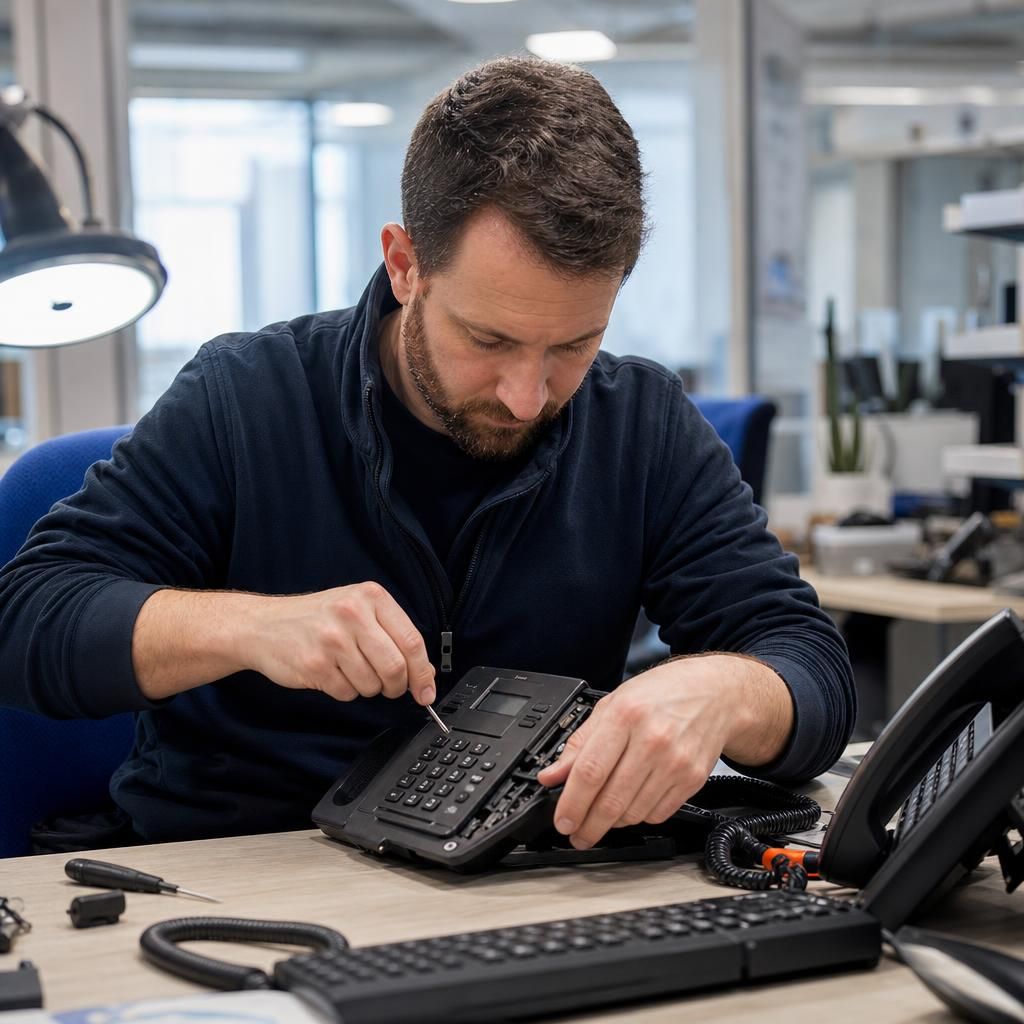
The most common repair issues for Yealink and Polycom phones start with power and boot failures. Phones that do not start, endlessly reboot, or display firmware errors may suffer from faulty PoE ports, damaged power injectors, failing capacitors or incomplete firmware updates. In many cases, a controlled firmware reload, power-cycle testing and port or adapter replacement will restore stability without needing a full handset replacement.
Audio and call quality problems are another frequent reason for repairs. Users may report echo, muffled sound, low volume, buzzing, or intermittent audio. These faults can originate from worn handsets, failing speakers or microphones, damaged cords, or incorrect audio gain settings. On VoIP systems, packet loss, jitter and misconfigured QoS can present as “hardware problems”, so thorough testing of both the phone and the network path is essential.
Registration, provisioning and feature issues also drive support requests. Phones that randomly deregister, fail to download configuration files, or lose access to features such as BLF keys and conferencing often point to outdated firmware, corrupted configuration, or changes on the SIP server. Reprovisioning, firmware standardisation across the fleet, and careful review of VLAN, DHCP and firewall settings typically resolve these issues and reduce repeat faults.
Get Expert Solutions for Your Phone Issues
Our skilled telephone engineers specialize in resolving Yealink and Polycom phone problems, ensuring a seamless VoIP experience. Let us optimize your office communication system today!
Contact Us