

What is the typical installation process for Business Fibre Broadband with VoIP integration?
Learn the typical installation process for no contract business broadband with VoIP integration. Discover how it can enhance your SME's connectivity.
The typical installation process for business fibre broadband with VoIP integration begins with an initial assessment of your premises and requirements. A telecoms specialist will usually review your current connectivity, number of users, call volumes and any existing phone systems or cabling. This helps determine the most appropriate fibre service, router specification, and VoIP configuration, including how many handsets, extensions and call features you need. A site survey may be carried out to check line availability, identify the best location for network equipment, and assess any additional work required, such as structured cabling or WiFi access points. At this stage, you will also agree installation dates, any downtime windows, and how the migration from your existing services will be managed.
Once the planning is complete, an engineer will attend to install the fibre connection, configure the router and set up your VoIP service. Where necessary, this can involve fitting an optical network terminal (ONT), terminating fibre cabling, and integrating the new connection with your internal network. VoIP handsets or softphone applications are then provisioned, tested and linked to your chosen call plans and features, such as hunt groups, call recording or voicemail to email. The process usually concludes with thorough testing of internet speeds, call quality and failover arrangements, along with a handover of key information and support contacts. For no contract business broadband, particular care is taken to ensure the solution is stable and scalable from day one, so your organisation can benefit immediately from improved connectivity and flexible telephony.
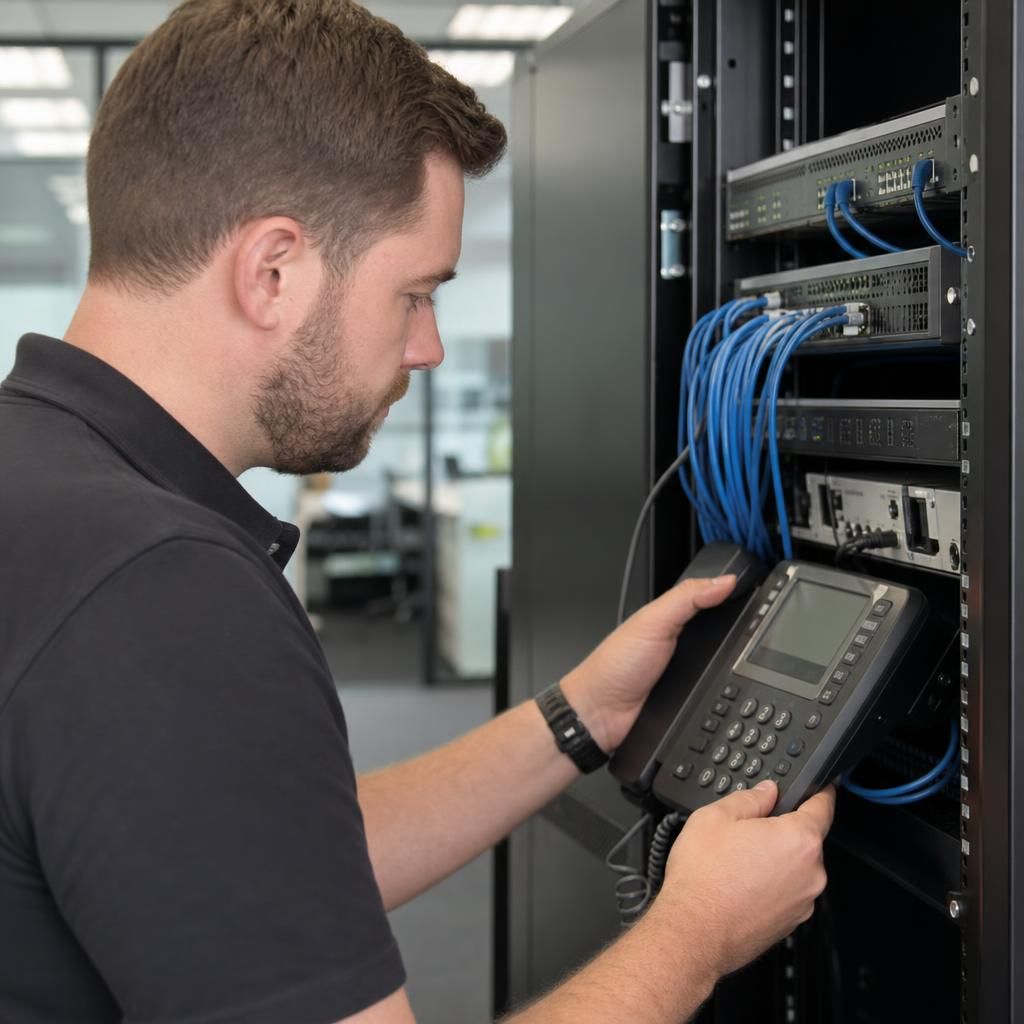
The first stage is usually a consultation and line check to confirm fibre availability and the most suitable bandwidth for your business. At this point, you will discuss whether you need a new range of numbers, whether existing numbers should be ported to VoIP, and how calls should be routed within your organisation. This planning reduces disruption and ensures the installation supports both current and future needs.
Next, an engineer visit is scheduled to install or activate the fibre circuit and connect it to your network. The router and any firewalls are configured, quality of service (QoS) policies may be applied to prioritise voice traffic, and VoIP endpoints are registered to the cloud telephony platform. If required, new cabling and WiFi access points are installed to provide reliable coverage across the premises.
Finally, comprehensive testing is carried out. This includes speed and latency checks, internal and external test calls, and verification of features such as call forwarding, auto attendants and voicemail. Staff are given basic guidance on using the new system, and you receive details of ongoing technical support and monitoring so any issues can be resolved quickly.
Elevate Your Business Connectivity Today
Experience seamless integration with our no contract business broadband and VoIP solutions. Enhance your SME's efficiency and flexibility with our reliable, high-speed internet and communication services.
Contact Us